
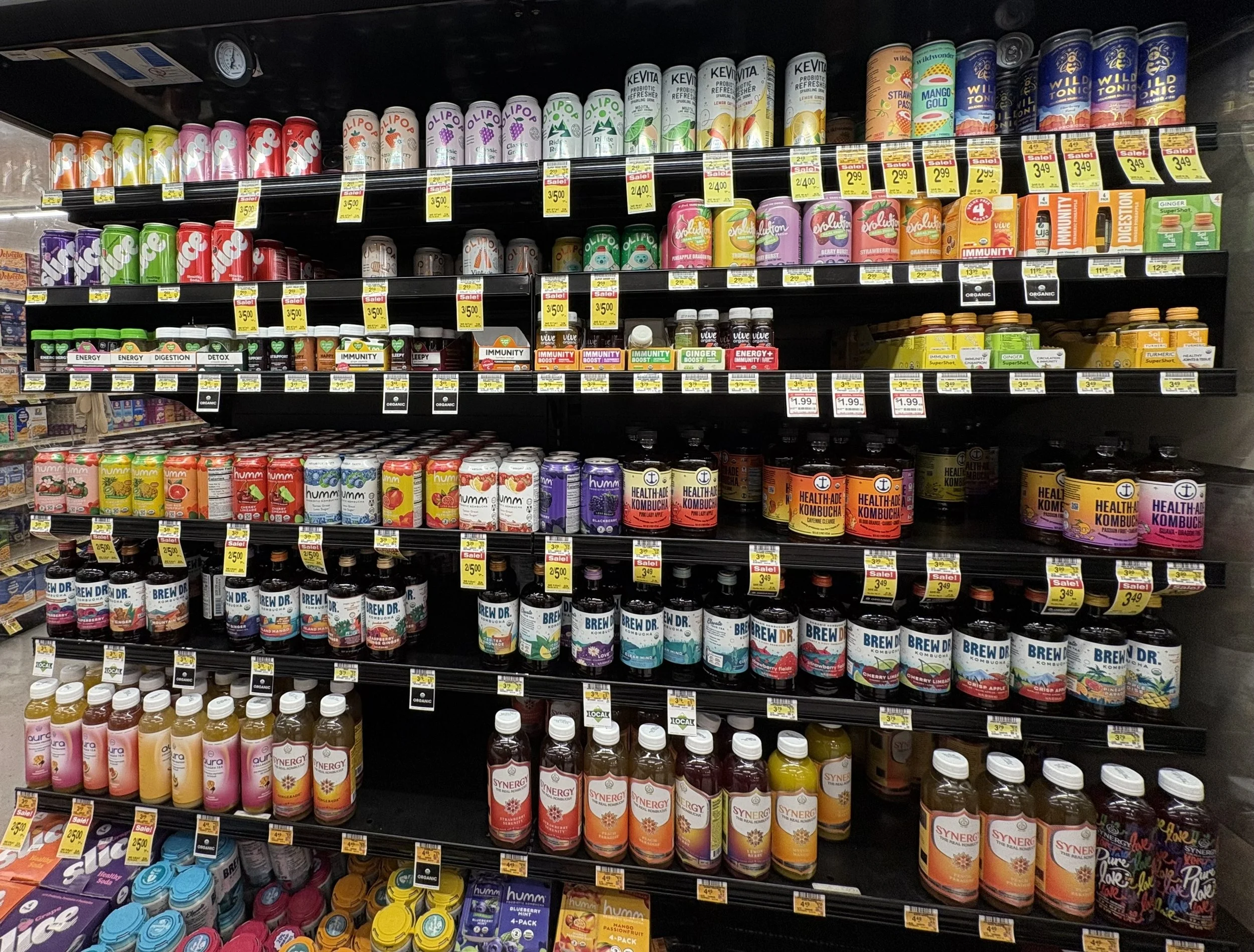
How Important Is Branding
in CPG?
In CPG, your product doesn’t get the luxury of a demo, a free trial, or a sales call. No one can taste your hot sauce, feel your lotion, or smell your soap before they buy it. Until the seal is cracked, the brand is the product.
Branding is the interface between your product and the customer’s brain. And if that interface creates even a moment of friction, your product never makes it into the cart.
Let’s break this down from the inside of the industry.
What “Branding” Actually Means in CPG (and What It Doesn’t)
Branding in CPG is not just a logo or a pretty label. It’s:
Positioning: Why should someone choose *this* over the six nearly identical options next to it?
Story & Meaning: Why this exists. Where it comes from. What it preserves or challenges.
Values & Point of View: What you stand for, and what you refuse to be.
Visual Identity: Logo, color, type, illustration style, designed to work in hand, on shelf, online, and in photos.
Packaging: Legible at 3 feet. Compliant. Manufacturable. Scalable across SKUs.
Consistency After Purchase: Does it taste as good as it looks? Does the brand show up consistently everywhere?
Trust: Trust earns the second purchase. Branding earns the first.
Retail Readiness: Does this look credible to buyers? Does it signal velocity, not “passion project”?
In CPG, branding is not support. It’s the frontline.
Here’s how you can choose the right brand or packaging designer so you don’t end up with something that only looks good on Instagram.
When Branding Becomes the Product
One of the clearest modern examples of this is Liquid Death.
The product itself is water. A complete commodity.
What Liquid Death recognized early on was that the real problem wasn’t hydration. It was context. Bottled water branding had become visually interchangeable: blue palettes, mountains, wellness language. That made water feel out of place in environments like concerts, bars, or social settings.
Their branding reframed water as a cultural object.
The tallboy can, the language, the tone. It gave people a way to choose water without feeling like they were opting out of the moment. The brand wasn’t an accessory to the product; it was the reason people reached for it.
This is a pattern you see repeatedly in CPG:
When the product itself is easy to replicate, the brand carries the meaning, the signal, and the emotional shortcut.
A Common Mistake: Designing for the Scroll Instead of the Shelf
One of the most common challenges I see with early-stage CPG brands is designing primarily for digital environments.
Brands are optimized to look beautiful on a phone screen, but struggle once they enter a physical retail space.
Retail operates on a different set of rules.
Shoppers are moving. Their attention is split. Products are competing with dozens of others in the same category.
If someone can’t quickly understand:
what the product is
who it’s for
why it’s different
the moment passes.
This is why the shelf is such a useful test, even for brands that aren’t selling in retail yet. If your branding can work in one of the most demanding environments, it tends to translate well everywhere else.
When Branding Matters Most
Branding plays a role at every stage of a CPG business, but there are two moments when it carries outsized weight.
1. The First Retail Pitch
When you pitch a retail buyer, they’re not evaluating whether a brand is simply “pretty.” They’re evaluating incrementality.
They want to know: “Does this brand bring a new shopper to my aisle, or does it just cannibalize the sales of the brands I already carry?” Your branding must signal a specific "Who": Is this the "Gen Z wellness" version of a category dominated by Boomer brands?
If your branding looks like everyone else’s, you're a redundancy.
2. The Rebrand After Proof of Concept
Many successful CPG brands begin with “good enough” branding and a strong product. Once demand is proven, branding becomes the lever that helps them move from niche to category leader.
In other words: you can often survive early stages with imperfect branding. But scaling, especially in retail, requires branding that can act as a silent salesperson.
So… How Important Is Branding in CPG?
Here’s the core idea I want founders to walk away with:
In CPG, being “better” on its own often isn’t enough. You need to be distinct. You can invest in advanced processing or a unique supply chain, but if your packaging doesn’t clearly communicate that advantage, the customer has no way of knowing.
Branding’s role is to translate technical excellence into something a shopper can understand and value in a few seconds. It turns behind-the-scenes differentiation into a clear reason to choose your product.
Recipes and formulations can look similar from the outside. What makes a brand memorable is how clearly it communicates why it’s different. Strong branding ensures that the work you’ve put into the product doesn’t disappear on the shelf.
If this post made you think differently about your brand, or left you wondering how this applies to your product, you can book a free clarity call with me, or learn more about my branding process.